
impactlake for Financial Institutions
Positive Impact Finance
with IMM
Support end-to-end workflows for PIF (Positive Impact Finance), sustainability-linked loans, and impact finance for regional companies — from deal assessment and KPI setting to ongoing monitoring and reporting. impactlake for PIF is a solution for organizing the business activities of borrowers and investees from an impact perspective and using that information for assessment, management, and dialogue.
Why it matters
Standardize and automate impact finance operations
Impact finance requires ongoing work across business understanding, impact area identification, KPI design, assessment rationale, in-term monitoring, and client dialogue. impactlake provides an operational platform that supports both internal management and client-facing communication for financial institutions.

Automate assessment processes
Reduce inconsistencies in assessment granularity and criteria across deals, and support branches, headquarters, credit teams, and external reviewers in working within a shared framework.

Continuous monitoring
Manage KPIs, targets, actuals, reporting frequency, and update history for each deal, making post-execution monitoring and annual reporting easier to sustain.

Use in engagement
Use assessment results and KPI performance for borrower engagement, internal communication, monitoring reports, and portfolio management.
Challenges
Challenges we address
PIF and impact finance operations need to balance assessment quality with reduced operational workload, while connecting impact information to continuous dialogue with borrowers and investees.
Assessment documents and materials are created manually and inconsistently
Information collection, impact structuring, KPI setting, and the way assessment rationale is documented can differ by deal owner, creating variation in quality and workload.
Assessment, approval, and monitoring information is scattered
Assessment memos, client interviews, KPIs, approval history, and monitoring results are often spread across multiple files and systems, making continuous management difficult.
Impact information is not ready for borrower dialogue
Impact information organized during assessment is not fully used after execution for business improvement, KPI progress checks, or engagement with clients.
Portfolio-level impact is difficult to understand
Even when individual deals are assessed, it is difficult to understand impact finance results and trends across sectors, regions, and themes.
Values
Implement assessment, management, and dialogue as one continuous flow
impactlake helps turn impact finance assessment from one-off document creation into information that can be continuously used for deal management, KPI monitoring, client dialogue, and internal reporting.
1
Deal assessment
Based on company information, business activities, public information, and interviews, impact areas, material areas, and assessment rationale are organized semi-automatically.
2
KPIs and monitoring
Manage KPIs, targets, actuals, monitoring frequency, and reporting deadlines linked to logic models and assessment results.
3
Reporting and engagement
Automatically create assessment documents, monitoring reports, internal briefing materials, and client-facing materials, and use them for borrower dialogue and improvement support.
Core Features
Key features
impactlake provides functions for assessment, KPI setting, monitoring, reporting, and deal management required for PIF and other impact finance operations.
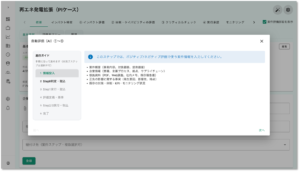
Automated impact assessment
- Organize impact areas based on company and business information
- Structure positive and negative impacts
- Record assessment rationale, considerations, and risks
- Organize information for assessment documents
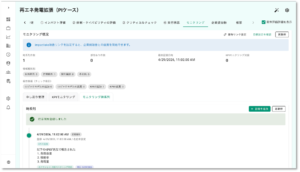
KPI setting and monitoring
- Manage KPIs, targets, and actual values
- Set update frequency and reporting deadlines
- Accumulate monitoring history
- Use KPI progress in client discussions
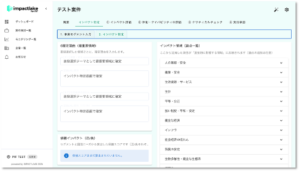
Deal and approval management
- Manage assessments and progress by deal
- Record internal review and approval history
- Manage owners, departments, and status
- Organize information for collaboration with external reviewers
Automated report creation
- Draft PIF assessment documents
- Automatically create monitoring reports
- Automatically create internal briefing and client-facing materials
- Reuse qualitative and quantitative information
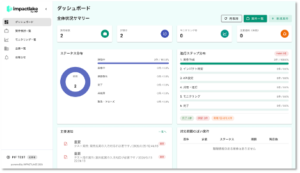
Portfolio management
- Manage by deal, company, and region
- Aggregate by sector and theme
- Visualize impact finance results
- Use outputs for management and headquarters reporting
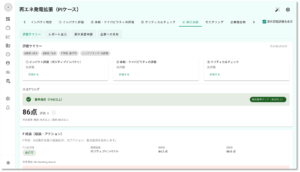
Engagement management
- Manage dialogue history with borrowers
- Record improvement actions and next check items
- Activate dialogue based on KPI progress
- Connect impact information to continuous client support
Implementation Steps
Implementation steps
impactlake can be introduced in stages from assessment to monitoring, based on your existing PIF and impact finance workflows.
1
Organize existing workflows and templates
Organize your existing assessment workflows, documents, approval processes, monitoring templates, and roles across relevant teams.
2
Standardize assessment items and KPI design rules
Design basic rules for deal assessment, including impact area structuring, assessment rationale, KPI setting, and monitoring frequency.
3
Run pilot operations with actual deals
Test assessment input, KPI setting, report creation, review and approval, and monitoring updates using actual deals.
4
Expand to headquarters and branches
As needed, clarify operating rules and roles across branches, headquarters, credit teams, external reviewers, and other stakeholders, and expand the workflow across the organization.
5
Continuous monitoring and reporting
Continuously update KPI results, dialogue history, and improvement actions, and use them for client support, internal reporting, and portfolio management.
Make impact finance more continuous and actionable
Talk to us if you are considering standardizing or automating assessment, KPI setting, monitoring, and reporting workflows for PIF and impact finance.